

Anthropic Labs just dropped something interesting: Claude Design. It’s a new product that lets you work with Claude to create visual stuff—designs, prototypes, slides, one-pagers, you name it. Powered by Claude Opus 4.7, it’s in research preview now for Pro, Max, Team, and Enterprise subscribers, rolling out gradually today.
Why this matters
If you’re a designer, you know the drill: you want to explore a dozen directions but only have time for a few. And if you’re not a designer—founder, PM, marketer—creating polished visuals can feel like a mountain. Claude Design aims to fix that by giving designers room to explore and everyone else a way to produce decent visual work without a design degree.
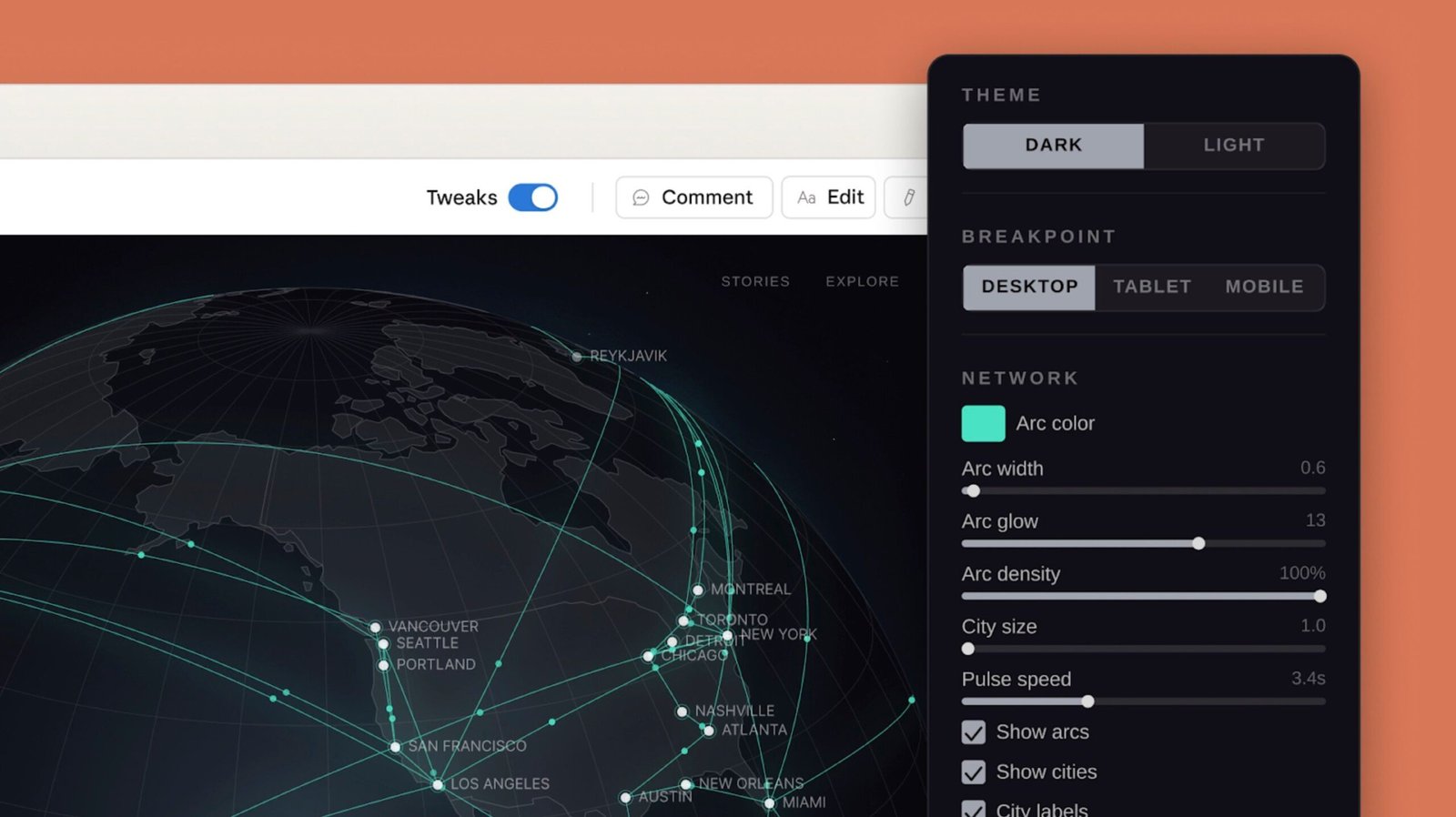
You describe what you need, Claude builds a first version. Then you refine through conversation, inline comments, direct edits, or custom sliders that Claude generates on the fly. It’s basically like having a junior designer who never sleeps and doesn’t complain about revisions.
What teams are actually using it for
I’ve seen some interesting use cases from early testers:
- Realistic prototypes: Designers turn static mockups into interactive prototypes without code review or PRs. One team at Brilliant said their most complex pages, which took 20+ prompts in other tools, only needed 2 prompts here.
- Product wireframes: PMs sketch feature flows and hand them to Claude Code for implementation or to designers for polish.
- Design explorations: Quickly generate a wide range of directions to explore.
- Pitch decks: Founders and AEs go from rough outline to on-brand deck in minutes, export as PPTX or send to Canva.
- Marketing collateral: Landing pages, social assets, campaign visuals—then loop in designers to polish.
- Frontier design: Code-powered prototypes with voice, video, shaders, 3D, and built-in AI. This is where things get wild.
How it actually works
The workflow is refreshingly straightforward:
Your brand, built in. During onboarding, Claude reads your codebase and design files to build a design system. Every project after that uses your colors, typography, and components automatically. You can refine over time, and teams can maintain multiple systems.
Import from anywhere. Start from text, upload images or documents (DOCX, PPTX, XLSX), or point Claude at your codebase. The web capture tool grabs elements directly from your website, so prototypes look like the real product.
Refine with fine-grained controls. Comment inline on specific elements, edit text directly, or use adjustment knobs to tweak spacing, color, and layout live. Then ask Claude to apply changes across the full design.
Collaborate. Designs have organization-scoped sharing. Keep a document private, share view-only links, or grant edit access so colleagues can modify the design and chat with Claude together.
Export anywhere. Share as an internal URL, save as a folder, or export to Canva, PDF, PPTX, or standalone HTML files.
Handoff to Claude Code. When a design is ready to build, Claude packages everything into a handoff bundle. Pass it to Claude Code with a single instruction. This is slick—no more context-switching between design and development.
The integrations angle
Canva’s already on board, which makes sense: “We’re excited to make it seamless for people to bring ideas and drafts from Claude Design into Canva, where they instantly become fully editable and collaborative designs,” says the Canva team. Over the next few weeks, Anthropic plans to make it easier to build custom integrations too.
My take
This is higher than I expected from Anthropic. They’ve been pushing code generation and reasoning, but visual design is a different beast. The key differentiator here is the design system integration—most AI design tools make you start from scratch every time. Having Claude read your actual codebase and design files to maintain brand consistency is genuinely useful.
The real test will be how well it handles complex layouts and whether the output actually looks good. Early feedback from Brilliant suggests it’s promising, but I’m skeptical until I see it handle truly intricate designs.
One downside: it’s off by default for Enterprise, which means IT departments will need to opt in. That’s typical for enterprise security but adds friction.
Getting started
Access is included with your plan and uses your subscription limits. You can enable extra usage beyond those limits. For Enterprise orgs, admins need to enable it in Organization settings. Start at claude.ai/design.
I’ll be testing this over the next few days. If it works as advertised, it could change how teams prototype and iterate. If not, well, it’s still in research preview.
Comments (0)
Login Log in to comment.
Be the first to comment!