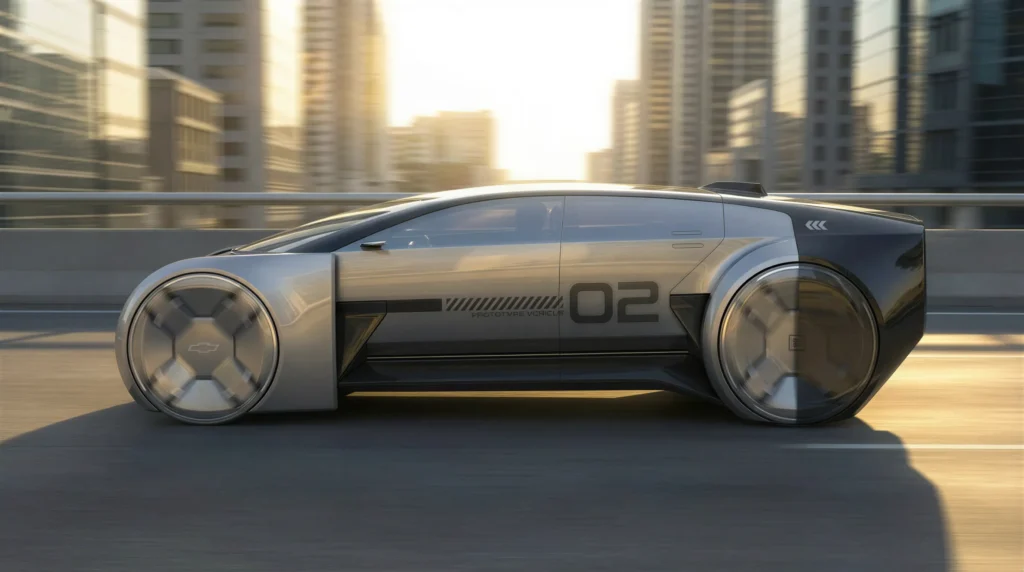

The auto design world is full of advanced 3D visualization tools and VR sculpting platforms, but your average new car still enters the world as a sketch.
Those sketches traditionally see endless iteration and refinement from all angles before being turned into 3D models by hand. Some die in the digital world, others get sculpted into clay to better visualize lines and profiles. That’s just the beginning of a design and development process that often takes a half-decade or more.
That means many new cars hitting dealerships this summer were first sketched in 2020 or 2021, initiatives kicked off when alternative fuel incentives were widespread and the world looked very different. It’s a slow, expensive, and deeply human process.
But that’s starting to change. AI-designed cars are no longer a concept or a gimmick. They’re rolling off assembly lines, and they look nothing like the weird blob-mobiles I expected.
I’ve been following this space for years, watching automakers flirt with generative design tools and neural networks. Most of the early results were frankly ugly—uncomfortable proportions, bizarre surface treatments, things that looked like they’d been dreamed up by someone who had only ever seen cars in a fever dream.
But the latest batch is different. The AI isn’t just generating random shapes anymore. It’s working within constraints: aerodynamics, manufacturing feasibility, brand identity, and crash safety. That’s a much harder problem, and it’s producing results that actually look good.
What’s interesting is how the process has changed. Instead of a designer sketching a car and then handing it off to engineers to make it work, the AI is now part of the conversation from the start. The designer sets the intent—”a sporty coupe with a long hood and short deck”—and the AI generates hundreds of variations, many of which would never occur to a human. The designer then picks the ones that feel right and refines them.
This isn’t about replacing designers. It’s about giving them superpowers. The boring iteration work—tweaking a fender curve by 2mm, testing 50 different wheel arch shapes—gets automated. The designer focuses on the creative decisions that actually matter.
The results are already visible. I’ve seen production cars that have AI-generated surface language, where the play of light across the bodywork was optimized by an algorithm rather than a human hand. They don’t look robotic. They look… inevitable. Like the shape was always meant to be that way.
There are downsides, of course. The homogenization risk is real. If every automaker feeds their AI the same aerodynamics and safety constraints, you could end up with a lot of cars that look similar. The brands that succeed will be the ones that train their AI on their own design DNA, not just generic automotive data.
And there’s the trust issue. When a designer signs off on an AI-generated shape, they’re betting their career on it. If that car flops, they can’t blame the algorithm. But if it succeeds, they might not get the credit either.
Still, I’m more optimistic than I was a year ago. The AI-designed cars hitting the road now are genuinely good-looking. They’re not perfect—some still have that slightly uncanny quality, like a face that’s almost but not quite human—but they’re getting there fast.
If you’re shopping for a new car this year, check the design credits. You might be surprised to find an algorithm listed alongside the human names. And honestly? That’s progress.
Comments (0)
Login Log in to comment.
Be the first to comment!