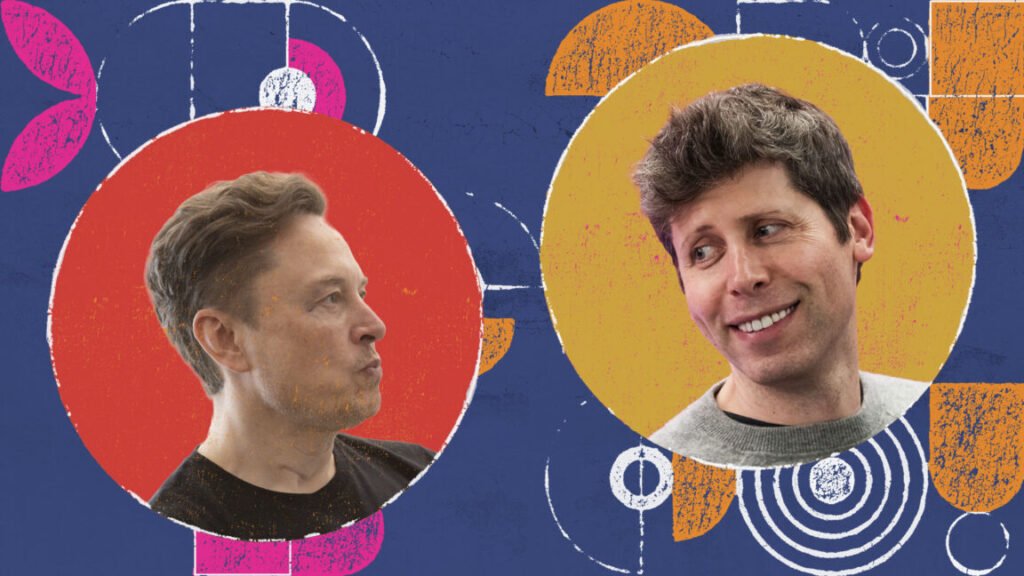

This week, a courtroom in California becomes the stage for one of the most personal and consequential tech trials in recent memory. Elon Musk is going after Sam Altman and OpenAI, alleging that the company abandoned its nonprofit roots and sold out its mission to serve humanity.
If you’ve been following the AI space, you know this has been brewing for years. Musk was an early donor and advisor to OpenAI back when it was a pure nonprofit. He left in 2018, citing conflicts of interest—and a desire to build his own AI efforts at Tesla and xAI. Now he’s back, not with a check, but with a lawsuit.
Let’s be real: there’s plenty of ego in the room. Two of the richest, most ambitious men on the planet airing grievances in court? That’s catnip for the press. But strip away the billionaire soap opera, and there’s a real question here: can a company like OpenAI stay true to its original mission while chasing the kind of capital needed to compete at the frontier of AI?
Musk’s argument is straightforward. OpenAI was founded as a nonprofit to develop AI safely and for the benefit of all. Somewhere along the way, Altman pivoted to a capped-profit structure, then a full-blown for-profit arm. Musk says that’s a betrayal. He wants the court to force OpenAI back to its nonprofit roots, remove Altman and co-founder Greg Brockman from their officer roles, and kick Altman off the board.
If Musk wins, it’s not just a PR hit for OpenAI. It would fundamentally break the company’s current operating model. OpenAI’s for-profit arm is what funds the massive compute and talent costs behind models like GPT-4 and whatever comes next. Without it, the nonprofit would be left with a few billion in donations and a lot of expensive GPUs to pay for. That’s not sustainable.
But here’s the thing: Musk isn’t exactly a neutral party. He runs xAI, which competes directly with OpenAI. A win in this trial would kneecap his biggest rival. That doesn’t mean his claims are baseless—plenty of people inside and outside OpenAI have expressed concern about the company’s direction—but it does mean the court will be watching his motives closely.
Altman’s defense will likely hinge on necessity. Building frontier AI is absurdly expensive. The nonprofit structure couldn’t attract the talent or capital needed to stay competitive. The capped-profit model was a compromise—a way to keep some public benefit while still raising billions. Whether that’s a reasonable evolution or a mission drift is what the jury will decide.
I’ve seen this pattern before in open-source and nonprofit tech. A project starts with idealistic goals, then reality hits. Funding dries up, talent leaves, and suddenly “for the benefit of all” turns into “for the benefit of our investors.” OpenAI is just the highest-profile example.
What makes this trial different is the stakes. We’re not arguing over a database license or a trademark. We’re talking about the governance of a company that may build artificial general intelligence within the decade. If OpenAI is forced back into a nonprofit box, it might slow down or even halt its most ambitious work. If Musk loses, OpenAI continues on its current path, with all the ethical questions that entails.
Either way, the outcome will set a precedent for how AI companies can structure themselves. Other labs—Anthropic, xAI, Google DeepMind—will be watching. If the court says you can’t pivot from nonprofit to for-profit without breaching your mission, that changes the calculus for everyone.
I’ll be following the trial closely. Not for the drama—though there will be plenty—but because this is one of those rare legal battles where the ruling could actually shape the future of a technology that’s already changing everything.
Comments (0)
Login Log in to comment.
Be the first to comment!