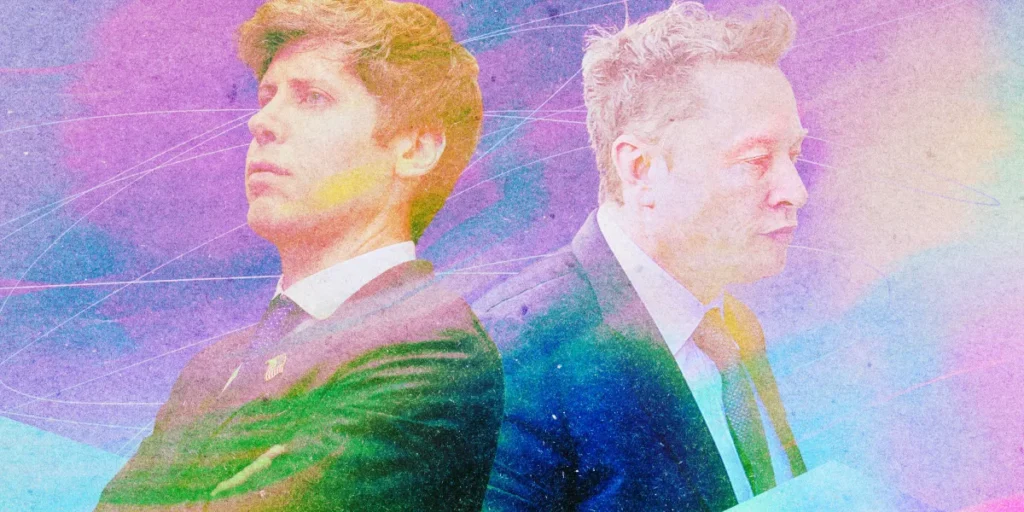

After a yearslong legal feud, Elon Musk and Sam Altman are finally taking their fight to a courtroom in Northern California this week. The stakes couldn’t be higher: the outcome could determine whether OpenAI can proceed with its highly anticipated IPO, whether it can exist as a for-profit enterprise at all, and whether Altman and his president Greg Brockman get booted from their roles.
Musk is suing OpenAI, alleging that Altman and Brockman tricked him into funding the company early on by promising it would stay a nonprofit dedicated to open-source AI for humanity’s benefit. Then, he says, they flipped the script and built a for-profit subsidiary. Musk co-founded OpenAI with Altman back in 2015 but left in 2018 after a messy power struggle. Now he wants as much as $134 billion in damages from OpenAI and Microsoft, and he’s asking the court to remove Altman and Brockman and restore OpenAI to nonprofit status. Notably, Musk says any damages should go to OpenAI’s nonprofit, not to his own pocket.
Nine jurors will deliver an advisory verdict—non-binding, but it’ll guide the judge. Musk, Altman, and Brockman will all take the stand. Also expected to testify: former OpenAI chief scientist Ilya Sutskever, former CTO Mira Murati, and Microsoft CEO Satya Nadella. Expect cringey texts, raw diary entries, and endless scheming to come to light. In an industry that thrives on secrecy, this trial is a rare chance for the public to peek behind the curtain.
What’s the actual fight about?
When OpenAI launched as a nonprofit, backed by Musk’s $38 million donation, it promised open-source tech for the public good, no profit pressure. But over time, the company argued that competition made sharing AI development dangerous and that a nonprofit couldn’t raise enough cash to keep building. (MIT Technology Review first reported on OpenAI’s internal mission conflicts.)
The court has already found that by 2017, Altman and Brockman wanted a for-profit arm, while Musk wanted to merge OpenAI with Tesla. When Musk threatened to stop funding, Altman and Brockman assured him they’d stay nonprofit. Musk claims they plotted the pivot behind his back. OpenAI counters that Musk agreed a for-profit entity was needed and even wanted to be CEO.
But here’s the thing: even if Musk proves he was duped, he might not have standing to sue over the restructuring. Legal scholars are puzzled the judge let this go forward. “The idea that Elon Musk can sue because he was a donor or used to be on the board is pretty puzzling,” says Jill Horwitz, a nonprofit law professor at Northwestern. “Typically, it’s up to the attorneys general to bring such a claim. And that’s already happened.”
In October 2025, California and Delaware attorneys general struck a deal with OpenAI to approve its new corporate structure under conditions—like a safety committee to review for-profit decisions. Critics including Musk, AI safety advocates, and civil society groups tried to block it. California’s AG declined to join Musk’s lawsuit, saying they didn’t see how it serves the public interest.
Whether that deal actually holds OpenAI to its mission is up for debate. “Elon Musk should have to show what the deficiencies are in what’s been agreed to by OpenAI with the attorneys general,” says Rose Chan Loui, director of the UCLA School of Law’s nonprofit program.
Why this trial matters beyond the drama
This isn’t just a billionaire grudge match. The trial could set a precedent for how AI companies balance mission and profit. If Musk wins, it might force OpenAI back to nonprofit status—or at least impose stricter oversight. If he loses, it greenlights the for-profit pivot for other AI startups that started as do-gooder nonprofits.
Either way, we’re about to get an unprecedented look at the messy reality behind the AI hype. The texts, the emails, the boardroom scheming—it’ll all be public. That’s rare in an industry that operates like a black box.
I’ve been watching this feud for years, and honestly, I’m skeptical Musk’s motives are pure. He left OpenAI in 2018, then launched his own AI company, xAI, which competes directly. He’s also been cozying up to Trump and pushing anti-woke narratives. But that doesn’t mean he’s wrong about OpenAI abandoning its original mission. The company started as a nonprofit promising to democratize AI; now it’s a $300 billion behemoth selling access to the most powerful models on Earth. Something shifted.
The trial starts this week. Expect fireworks.
Comments (0)
Login Log in to comment.
Be the first to comment!