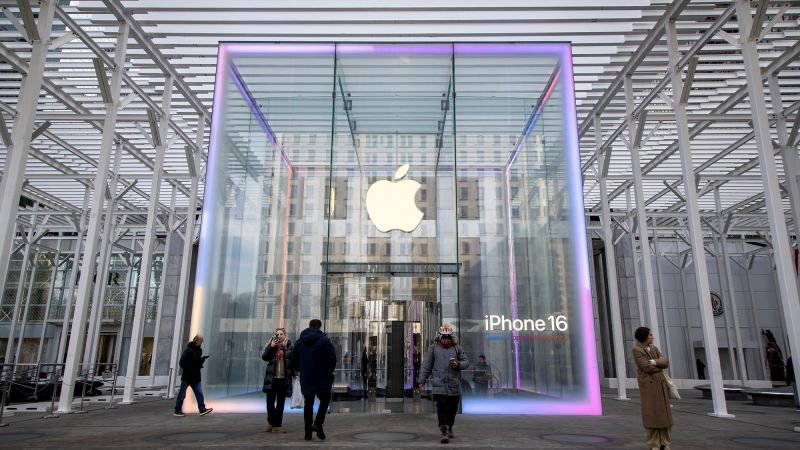

Apple has been taking heat from every direction for its clumsy AI rollout. The much-hyped AI-powered Siri got delayed indefinitely. The features that did ship, like text message summaries, are borderline useless. Tech and finance media are having a field day.
And look, some of that criticism is fair. Apple usually doesn’t stumble like this. But there’s a bigger question nobody wants to ask: what if the problem isn’t Apple, but AI itself?
The real reason everyone is chasing AI
The tech giants aren’t shoving AI into everything because users are begging for it. They’re doing it because Wall Street wants a story. Investors have been dreaming of an Apple “super cycle” — some killer feature so compelling that everyone rushes to upgrade. AI was supposed to be that feature.
Except nobody actually asked for it. Last year, Apple had to pull an ad for its AI features after a massive backlash. People weren’t excited. They were annoyed.
So Apple did something rare: it admitted the features weren’t ready and pushed the timeline out by a year. That should be a sign of responsibility, not failure. But in the current narrative, any delay is proof that Apple has fallen behind.
The fallacy that AI can never fail
There’s this idea floating around in tech circles that AI is inevitable and revolutionary, and any failure to adopt it is the fault of users who just don’t “get it.” It’s the same logic as “the party can never fail, it can only be failed.”
Kevin Roose from the New York Times recently argued that Apple is “not meeting the moment in AI” and needs to get more comfortable with shipping imperfect products. The implication is that we, the users, need to learn how to work around AI’s limitations. We should accept that chatbots might be wrong, and adjust our expectations accordingly.
To which I say: absolutely not.
Apple built a $3 trillion empire on the opposite philosophy. Its products work out of the box. You don’t need a manual. Your parents can figure out FaceTime in minutes. That’s not a weakness — it’s the entire reason people trust Apple with their face scans, bank accounts, and real-time locations.
Roose seems to think we should lower our standards for AI. But why? What has AI actually delivered as a consumer product that justifies that trade-off?
Nobody has figured this out yet
Casey Newton, Roose’s co-host on the Hard Fork podcast, made an observation that cuts through the hype: “AI is still so much more of a science and research story than it is a product story.”
He’s right. Google hasn’t shipped anything that makes people rush to buy a new Pixel. Amazon’s Alexa is still mostly a glorified timer. Even ChatGPT and Claude, impressive as they are, are 80% accurate at best. That’s fine for a research demo. It’s not fine for a product that billions of people rely on.
Apple’s sin, apparently, is that it refuses to ship something that isn’t ready. In a market where everyone is rushing to be first, Apple is choosing to be right. That might not please investors in the short term, but it’s the only approach that makes sense for a company whose brand is built on trust.
The real letdown
AI isn’t a failure because Apple can’t figure it out. It’s a failure because the technology, in its current form, doesn’t solve real problems for most people. The use cases are narrow, the accuracy is unreliable, and the privacy implications are terrifying.
Apple knows this. That’s why it’s taking its time. The company is betting that when AI finally works, it will be on Apple’s terms — secure, private, and actually useful. Until then, I’d rather have a delayed feature than a broken one.
Comments (0)
Login Log in to comment.
Be the first to comment!