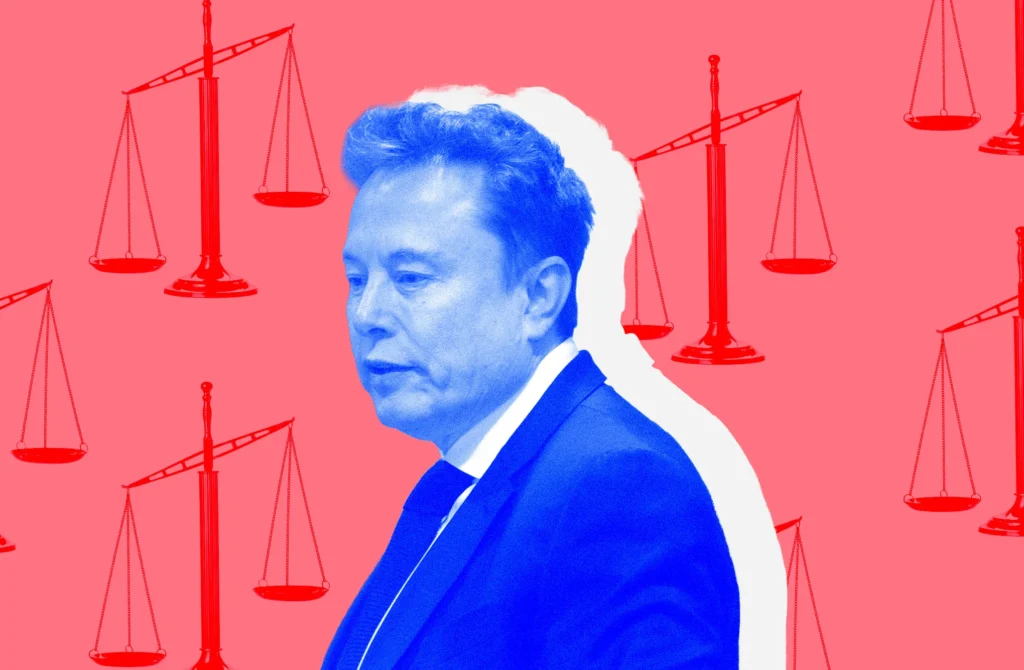

Elon Musk was in a California federal courtroom on Thursday, and he dropped a bombshell that makes his ongoing legal crusade against OpenAI look a little awkward. Under oath, Musk confirmed that his own AI startup, xAI, has been using OpenAI’s models to train Grok.
The technical term here is model distillation. It’s a standard practice in the industry: a larger “teacher” model passes its knowledge to a smaller “student” model. Companies do this internally all the time — think of it as compressing a bloated PhD into a sharp undergrad. But it’s also the go-to move for smaller labs trying to reverse-engineer the performance of a bigger competitor’s model without doing the heavy lifting themselves.
Musk was asked directly whether he knew what model distillation was. He said yes. Then the follow-up: had xAI used it with OpenAI’s models? Also yes. The courtroom went quiet for a beat, I imagine.
This is rich because Musk’s whole lawsuit against OpenAI hinges on the claim that the company abandoned its nonprofit mission and is now just a closed, profit-driven monopoly. His argument is that OpenAI shouldn’t be keeping its models secret or charging for access. Yet here he is, admitting that his own company piggybacked on those same models to build a competing product.
Let’s be clear: model distillation isn’t illegal. It’s a technical process, not a crime. But it does undermine the moral high ground Musk has been trying to claim. You can’t simultaneously say “OpenAI is evil for keeping its tech proprietary” and then benefit from that proprietary tech without permission — or at least without paying for it. The cognitive dissonance is staggering.
I’ve seen this play out before in the AI space. Smaller labs often distill from larger models to bootstrap their own offerings. It’s efficient, it’s cheap, and it works. But when you’re the guy suing the larger lab for being too closed, using their work under the hood is a bad look. It’s like complaining that the bakery won’t give you free bread while sneaking a loaf out the back door.
The timing matters too. This testimony comes as the industry is wrestling with how to handle distillation ethically. Some companies explicitly ban it in their terms of service. Others, like OpenAI, have been known to go after distill-happy startups. Musk’s admission basically hands his legal opponents a smoking gun: “You’re suing us for being closed, but you’re using our output to train your model. Make it make sense.”
Of course, xAI’s lawyers will likely argue that distillation falls under fair use or that the models were accessed through legitimate API calls. That’s a plausible defense, but it’s not a great look for a guy who built his public persona on being the anti-establishment disruptor.
What I find most telling is that Musk didn’t try to dodge the question. He could have said he wasn’t technically familiar with the process, or that it was handled by engineers without his knowledge. Instead, he owned it. That’s either refreshing honesty or a strategic miscalculation, depending on how you read the room.
Either way, this case just got a lot more interesting. The next hearing should be fun.
Comments (0)
Login Log in to comment.
Be the first to comment!