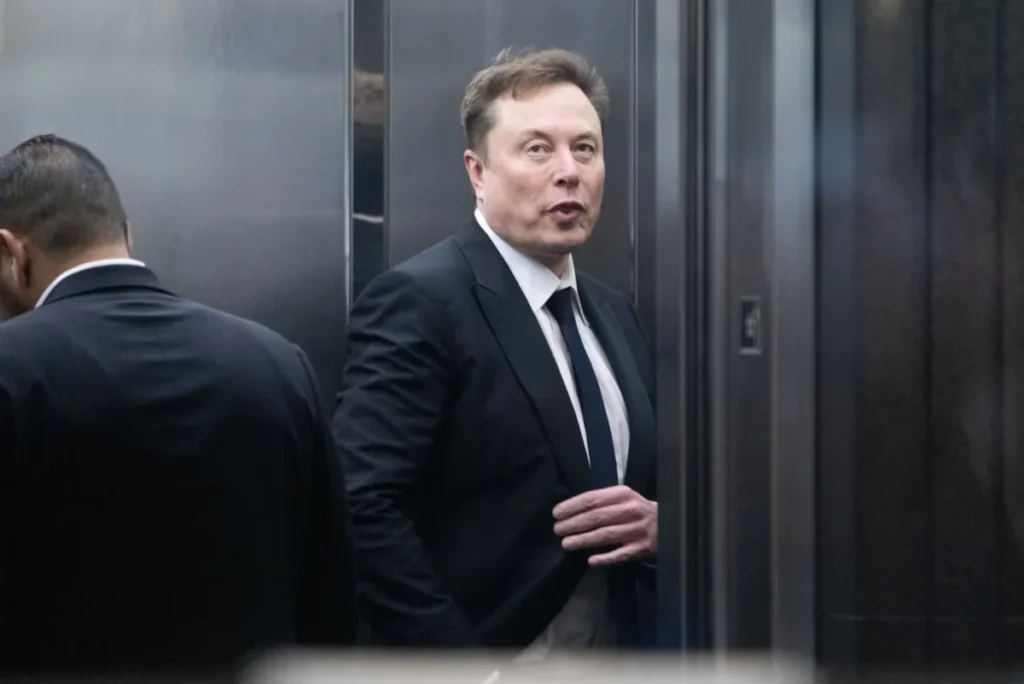

Elon Musk finally admitted what many in the AI community suspected: xAI used OpenAI’s models to train Grok. During a deposition last week, Musk confirmed that his company employed a technique called “distillation” to pull knowledge from GPT-4 and GPT-4 Turbo into their own Grok-1 and Grok-2 models.
Distillation isn’t new. It’s a common practice where a smaller model learns to mimic the outputs of a larger, more powerful one. Think of it as a student copying the teacher’s homework, then tweaking the answers. OpenAI’s own terms of service explicitly prohibit using their outputs to train competing models. So this is a direct violation, unless xAI had permission—which they clearly didn’t.
Musk’s defense? He claimed it was necessary to catch up quickly in the AI race. “We didn’t have the compute or the data to train from scratch,” he said. That’s a weak excuse. Plenty of startups have built competitive models without resorting to direct distillation from a competitor. Mistral, for example, trained their flagship models on carefully curated public data and synthetic generation, not by cribbing from GPT.
What’s ironic is that Musk has been one of the loudest critics of OpenAI’s closed-source approach. He’s repeatedly accused them of hoarding technology and abandoning their original nonprofit mission. Yet here he is, quietly using their work as the foundation for his own product. Hypocrisy doesn’t get much starker than this.
The legal implications are messy. OpenAI could sue xAI for breach of contract and copyright infringement. But Musk’s lawyers will likely argue that distillation falls under fair use, especially since Grok’s outputs are transformed and fine-tuned on additional data. Courts haven’t settled this yet, and the outcome could set a precedent for the entire industry.
From a technical perspective, distillation is surprisingly effective. You can take a 175-billion-parameter model like GPT-4, run inference on millions of prompts, and use those outputs to train a 7-billion-parameter model that achieves 90% of the original’s performance. That’s exactly what xAI appears to have done. Grok-2’s benchmarks are suspiciously close to GPT-4 Turbo in reasoning and coding tasks, which makes a lot more sense now.
But here’s the thing: distillation doesn’t give you innovation. You get a cheaper imitation, not a breakthrough. Grok’s so-called “humor mode” and real-time web access are nice gimmicks, but they don’t hide the fact that the core intelligence is borrowed. If xAI wants to be taken seriously as a frontier lab, they need to invest in original research, not just reverse-engineer someone else’s work.
OpenAI’s response has been predictable. They sent a cease-and-desist letter to xAI last month, demanding they delete all models trained using their outputs. Musk’s team ignored it. Now with this testimony, the pressure is on. Either xAI settles quietly, or we get a courtroom drama that could reshape how AI companies compete.
Honestly, I’m tired of the finger-pointing. Every major lab has been accused of distillation at some point. Google allegedly distilled from Anthropic. Meta was caught training LLaMA on GPT outputs. The difference is that those companies denied it until the evidence was overwhelming. Musk just admitted it outright, which is refreshingly honest but also damning.
What this really highlights is the broken incentives in AI development. The race to AGI is so intense that even billionaires with access to massive compute clusters feel compelled to cut corners. If you can’t win on technical merit, you cheat. And distillation is the easiest cheat there is.
For developers using Grok, this raises questions. If the model’s knowledge comes from GPT, are you indirectly benefiting from OpenAI’s work? And if OpenAI sues and wins, does Grok get shut down? The uncertainty alone should make you cautious about building on top of xAI’s platform.
Musk’s testimony is a rare moment of transparency in an industry built on secrecy and hype. But it also confirms what many of us suspected: the emperor has no clothes, and he borrowed them from his rival.
Comments (0)
Login Log in to comment.
Be the first to comment!