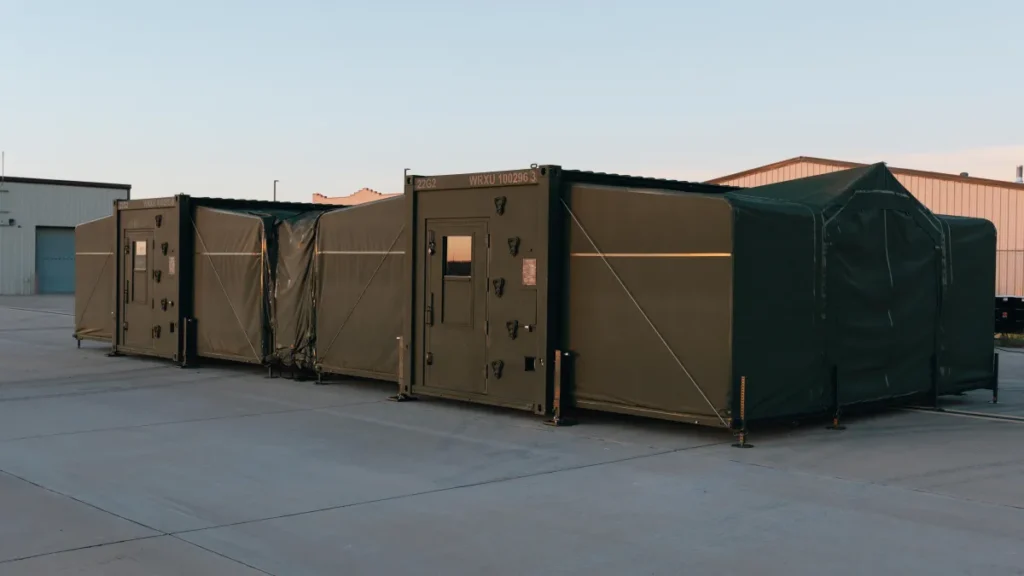

Firestorm Labs just closed an $82 million Series B, and the pitch is refreshingly weird: they want to put drone factories inside shipping containers and roll them right up to the front lines.
I’ve seen a lot of defense tech hype in the past few years, but this one actually makes me pause. The San Diego-based startup is betting that the future of military drones isn’t just about better airframes or AI targeting — it’s about where you build the damn things.
Their core product is something called the “xMFG” system. Think of it as a fully automated micro-factory packed into a standard 20-foot shipping container. You drop one near a staging area, feed it raw materials, and it starts churning out small drones on demand. No supply chain stretching across oceans, no waiting weeks for replacement parts.
The military logic is solid. In a contested environment, logistics nodes become prime targets. If your drone factory is a single building in Utah, one well-placed strike can take out your entire production capacity. Spread those factories across a hundred shipping containers, and suddenly the problem gets a lot harder for an adversary.
Firestorm claims each container can produce a specific type of tactical drone — think loitering munitions or reconnaissance quadcopters — and that the whole setup can be operational within hours of arrival. That’s ambitious, but they’ve already got contracts with the US Air Force and Marine Corps to prove they’re not just pitching vaporware.
The $82 million round was led by some heavy hitters in the defense tech space, including DCVC and Shield Capital. That’s the kind of backing that says “we think this actually works.”
What I find interesting is how this flips the traditional defense contracting model on its head. Normally, you design a drone, build a factory, and crank out thousands of identical units over years. Firestorm is essentially saying: forget the factory, bring the production line to the problem. It’s manufacturing as a service, but for warfare.
Of course, there are real questions here. Can a shipping container factory really match the quality control of a permanent facility? How do you handle maintenance and repairs in the field? And what happens when the enemy figures out where your container factories are parked?
But the bigger picture is clear: the era of centralized defense manufacturing is ending. If Firestorm can actually deliver on the promise, we might look back at this funding round as the moment the military-industrial complex finally got mobile.
For now, I’m cautiously optimistic. The concept is smart, the team has real operational experience, and the money is serious. Whether they can scale from prototypes to battlefield reality is the part I’ll be watching closely.
Comments (0)
Login Log in to comment.
Be the first to comment!