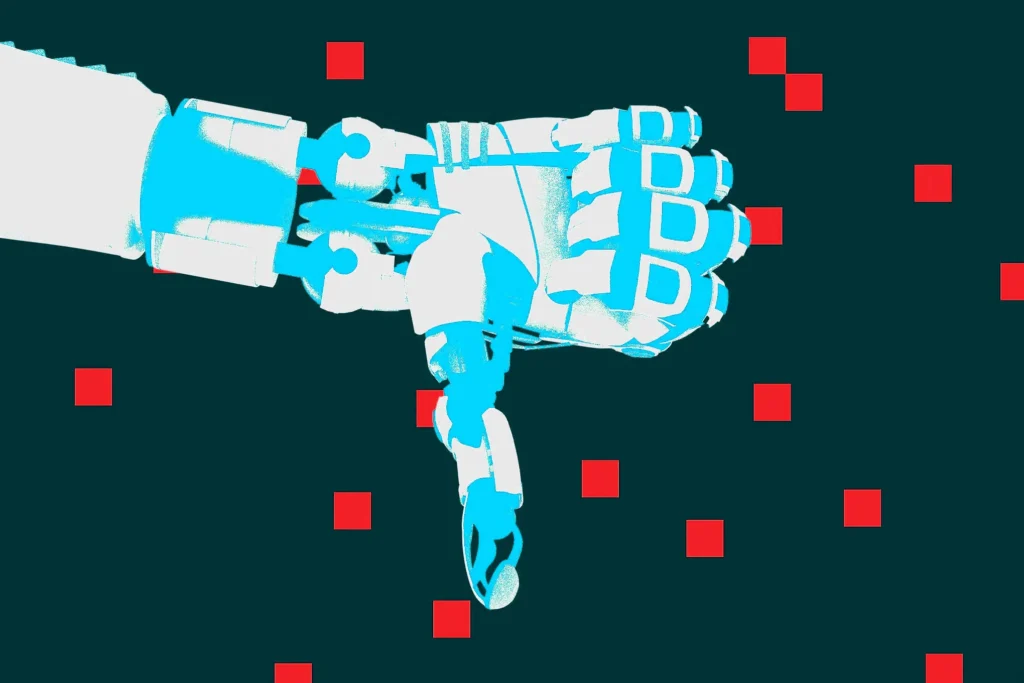

It’s been almost three years since Silicon Valley decided that large language model chatbots were the inevitable future of everything. And if you’ve been paying attention, you’ve noticed one group getting the full force of this push: Gen Z.
On paper, it makes sense that young people would be early adopters. They grew up with smartphones, social media, and the general expectation that everything should be instant. So yeah, they’re using ChatGPT, Claude, Gemini, and all the rest at higher rates than older demographics. That’s not surprising.
What is surprising—and what The Verge recently highlighted with some polling data—is that the same generation is also leading the backlash. They’re using these tools, but they’re not happy about it. In fact, a lot of them are openly hostile toward AI.
Let me rephrase that: they’re not hostile toward the idea of useful automation. They’re hostile toward the way tech companies are shoving half-baked chatbots into every corner of their lives—education, work, creative pursuits—and pretending it’s all inevitable progress.
I’ve been watching this play out in real time. Walk into any university computer lab and you’ll see students using ChatGPT to draft emails or summarize dense readings. But ask them how they feel about it, and you’ll get an earful about plagiarism accusations, soulless feedback, and the creeping sense that their professors can’t tell the difference between a student’s work and a machine’s output.
That’s the core tension. Gen Z isn’t anti-tech. They’re anti-bullshit. They can smell a corporate narrative from a mile away, and the “AI will make everything better” pitch smells exactly like the “social media will connect us all” pitch they watched fail in real time.
The polling data backs this up. A significant chunk of young users report feeling anxious, resentful, or even angry about AI tools—even as they continue using them. That’s not hypocrisy. That’s pragmatism mixed with frustration. They know the tools are useful for certain tasks. They also know the tools are being used to cut corners, devalue human labor, and replace genuine skill with probabilistic text generation.
And let’s be real: the tech companies haven’t helped their own case. OpenAI, Google, Meta—they’ve all spent the last few years treating every criticism as a PR problem to be managed rather than a genuine concern to be addressed. The result is a generation that feels talked down to, not listened to.
I’ve been in this space long enough to remember when “disruption” was a buzzword that excited people. Now it feels more like a threat. Gen Z has lived through the enshittification of social media, the gig economy’s broken promises, and the hollowing out of stable careers. They know what happens when a technology is deployed without accountability.
So what does this mean for the future? Honestly, I think it’s a good sign. A generation that uses AI but doesn’t blindly love it is exactly what we need. Blind adoption leads to bad products and worse policies. Skepticism, especially from the people actually using the tools, forces companies to either improve or face irrelevance.
Will that happen? I’m not holding my breath. But at least the data shows that young people aren’t drinking the Kool-Aid. They’re using AI because they have to, not because they want to. And that distinction matters more than any press release from Silicon Valley.
Comments (0)
Login Log in to comment.
Be the first to comment!