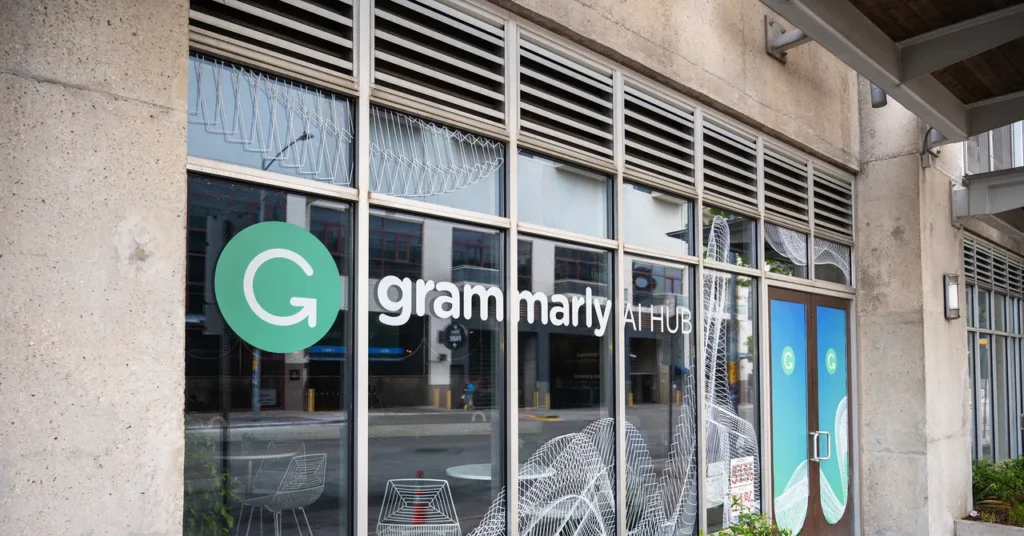

Remember being a teacher’s pet? Or maybe you just miss getting feedback from that one professor who actually read your drafts. Grammarly has decided to solve this problem by letting you get simulated criticism from Stephen King, Neil deGrasse Tyson, Carl Sagan, and a bunch of other famous writers—alive and dead—whether they like it or not.
Grammarly started as a glorified spellchecker. Over the past few years, it’s been crammed with generative AI features. In October, CEO Shishir Mehrotra announced the whole company rebranded as Superhuman (the writing tool kept the Grammarly name, because branding is hard). His press release said something about technology feeling ordinary when it works everywhere. I don’t know about you, but I don’t find this ordinary at all.
The platform now has an AI chatbot for drafting questions, a paraphraser for style tweaks, a humanizer that adjusts voice, an AI grader that predicts college scores, and even tools to flag phrases that sound too much like an LLM wrote them. The irony of using AI to make your writing less AI-like is apparently lost on nobody.
Then there’s the Expert Review feature. Instead of getting generic LLM feedback, you can pick from a list of real academics and authors whose AI clones will critique your text. The disclaimer says these people have nothing to do with the process: “References to experts in this product are for informational purposes only and do not indicate any affiliation with Grammarly or endorsement by those individuals or entities.” So you’re getting fake reviews from real people who didn’t agree to it.
Stephen King and Neil deGrasse Tyson didn’t respond to requests for comment. Neither did Carl Sagan or William Zinsser, but that’s because they’re dead. The AI agents are presumably trained on these people’s published work. The legality is murky—understatement of the year—and there are plenty of copyright lawsuits floating around.
Jen Dakin, senior comms manager at Superhuman, explained that the Expert Review agent examines your writing and “leverages our underlying LLM to surface expert content.” The suggested experts depend on the topic. The agent doesn’t claim endorsement; it just provides “suggestions inspired by works of experts.” That’s a careful way of saying “we scraped their writing without asking.”
Vanessa Heggie, a history of science professor at Birmingham, posted on LinkedIn about this being “obscene.” She showed a screenshot where the tool offered analysis from an AI agent modeled on David Abulafia, a medieval historian who died in January. The tool was already using his work for profit before his estate could even settle.
C.E. Aubin, a historian at Yale, called it “pretty insulting to see scholarship used this way when the academic humanities are currently under attack from every possible angle.” She said it reduces actual thinkers to their work, removing personhood entirely. Then there’s the whole “reanimating the dead” thing, which is just cynical.
Beyond the ethics, does any of this actually work? I tested the plagiarism detector and it missed a direct quotation I threw at it. So the quality is questionable even if you ignore the moral problems.
Look, I get that AI tools can help writers. But simulating dead people’s voices without consent? Using living authors’ names without permission? This feels less like innovation and more like a cash grab dressed up in academic robes. Grammarly’s feature might be technically impressive, but it’s built on a foundation of disrespect—for the living, the dead, and the very idea of authorship.
Comments (0)
Login Log in to comment.
Be the first to comment!