
The first 24 hours of the US assault on Iran involved strikes on more than 1,000 targets. That’s nearly double the scale of the “shock and awe” campaign against Iraq back in 2003. The difference? AI systems that dramatically speed up the targeting loop.
The centerpiece is the Maven Smart System. It’s not a single weapon or platform—it’s a software layer that ingests drone feeds, satellite imagery, signals intelligence, and other data, then spits out prioritized target recommendations. Human operators still make the final call, but the system handles the grunt work that used to take analysts days.
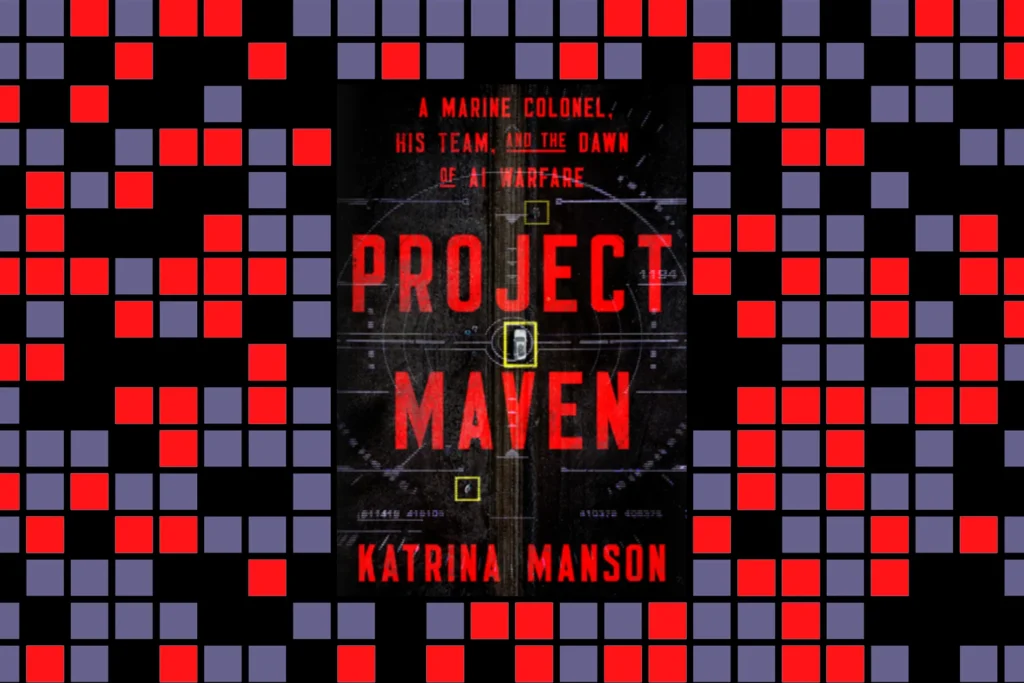
Journalist Katrina Manson has a new book out, Project Maven: A Marine Colonel, His Team, and the Dawn of AI Warfare, that traces the whole story from the beginning. And it’s a wilder ride than you might expect.
Maven started in 2017 as a small experiment. The idea was to apply computer vision to the endless hours of drone footage the military collects. Humans are terrible at watching hours of grainy video looking for a single moving vehicle. Machines are pretty good at it.
The original contractor was Google. That didn’t last long. When employees found out their company was feeding AI into the military targeting pipeline, they revolted. Thousands signed petitions. Some quit. Google backed out in 2018, saying it wouldn’t renew the contract.
That’s where the story gets interesting. The Pentagon didn’t scrap the project. They brought it in-house and kept building. The Marine colonel who ran the program essentially told the brass: “We can do this ourselves, and we don’t need Silicon Valley’s permission.”
And they did. The Maven Smart System is now deeply integrated into US military operations. It’s not experimental anymore. It’s operational, and it’s changing how wars are fought.
The scale is what got my attention. 1,000 targets in 24 hours is not something you do with human analysts alone. That kind of tempo requires machines to do the sifting, the matching, the cross-referencing. Humans are still in the loop, but the loop has gotten very fast.
There’s a tension here that Manson’s book apparently explores in depth. The same technology that helps avoid civilian casualties by being more precise also enables much larger-scale strikes much faster. Speed cuts both ways.
I haven’t read the full book yet, but the trajectory is clear. The US military went from “our own employees won’t touch this” to “this is core to how we operate” in less than a decade. That’s a remarkable shift for an institution that usually moves at glacial pace.
The question nobody has a good answer to yet: what happens when adversaries build the same thing? Because they will. The Maven cat is not going back in the bag.
Comments (0)
Login Log in to comment.
Be the first to comment!