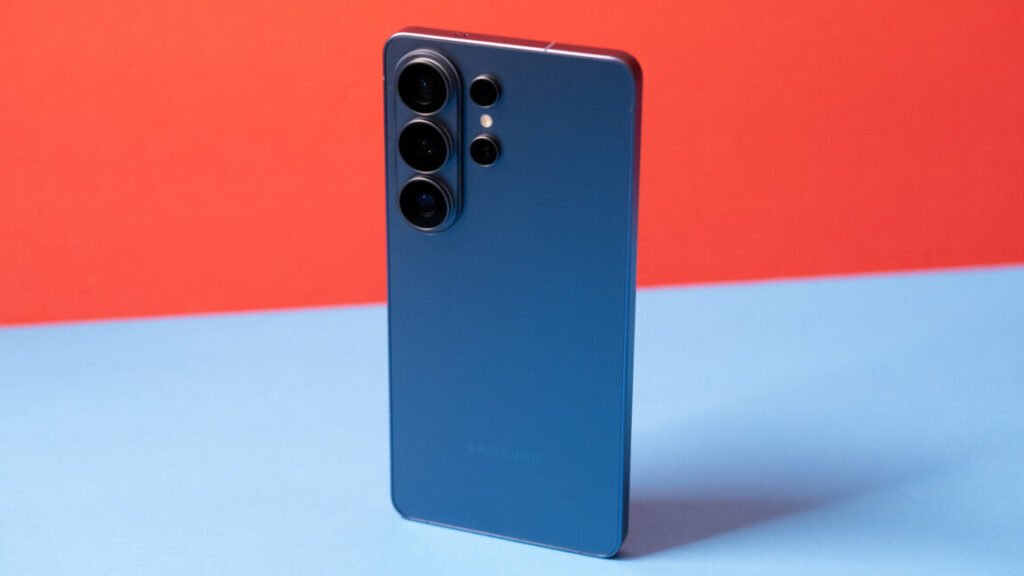

Samsung is nothing if not consistent. Another year, another Galaxy S lineup. Rumors about shaking up the naming or dropping a model didn’t materialize, so we’re still looking at three phones: the S26, S26 Plus, and the S26 Ultra. The Ultra, at a cool $1,300, is the one people actually buy—even though you can get a perfectly good phone for a third of that. But the Ultra isn’t competing with budget phones. It’s selling a different idea entirely.
The S26 Ultra is big. Like, really big. It’s powerful, overflowing with features, and honestly, it can be a bit much. Especially if you don’t care about mobile AI. Samsung has leaned hard into on-device AI this year, and it shows. There are new privacy-focused features, like local image processing and voice commands that don’t touch the cloud. That’s genuinely nice. But there’s also a lot of AI stuff that feels like it’s there just because Samsung wanted to check a box.
Let’s talk about the hardware first. The screen is gorgeous—bright, sharp, and smooth at 120Hz. The camera system is still a beast, with a 200MP main sensor that takes detailed shots in good light and handles low light better than I expected. The zoom lens is still the best in the business, though I wish they’d done something about the shutter lag. It’s better than last year, but not by much.
The battery life is solid. I got through a full day of heavy use without panic-charging, which is more than I can say for some flagships. Charging speeds are still behind Chinese competitors, but Samsung’s wireless charging is reliable. The S Pen is still here, still tucked into the bottom, and still mostly used by people who take a lot of notes. I’m not one of them, but I appreciate that it exists.
Now, the AI. Samsung calls this the “AI phone” and it’s not wrong. There’s a new assistant that can summarize articles, translate text in real time, and even edit photos by describing what you want. Some of it works great. The photo editing is surprisingly good—I removed a photobomber from a group shot and it looked natural. The translation is fast and accurate enough for travel.
But there’s also a lot of friction. The AI features are scattered across different apps and menus, and I found myself forgetting how to trigger half of them. The voice assistant still doesn’t understand context well. And some features, like the AI wallpaper generator, feel like novelties I used once and never touched again. Samsung needs to pick a lane and commit.
Privacy-wise, Samsung is making a real effort. A lot of the AI processing happens on-device now, which is good. They’ve also added a privacy dashboard that shows exactly what data the AI is using. It’s better than Apple’s approach in some ways, but the execution is clunky. I had to dig through three layers of settings to find it.
At $1,300, the S26 Ultra is expensive. But compared to where component prices are going, it might actually look like a decent deal in a year or two. The build quality is excellent, the software support is long (seven years of updates), and you’re getting a phone that does everything. The question is whether you want it to do everything.
If you’re the kind of person who buys a flagship and keeps it for four years, this is probably the one to get. If you upgrade every two years and don’t care about AI, you might be better off with a Pixel or an iPhone. The S26 Ultra is a great phone, but it’s also a very specific phone. Samsung knows who it’s for, and it’s betting that’s enough.
Comments (0)
Login Log in to comment.
Be the first to comment!