
Last August, some of the best cybersecurity teams in the business gathered in Las Vegas to show off their AI bug-finding systems at DARPA’s Artificial Intelligence Cyber Challenge (AIxCC). The setup was straightforward: DARPA had injected artificial flaws into 54 million lines of real software code, and the teams had to find them. They did that, mostly. But here’s the part that made people sit up — their automated tools found more than a dozen bugs that DARPA hadn’t planted at all. Real, unknown vulnerabilities in production code that had been sitting there, waiting.
That was already a big deal. Then this month, Anthropic dropped Claude Mythos, and the security world hasn’t been the same since. Mythos seems to find vulnerabilities at a rate and depth that makes previous AI models look like they were playing whack-a-mole with a blindfold. I’ve been in this space long enough to know when hype is just hype, but the early reports from independent researchers are hard to dismiss. We’re looking at a genuine step change.
Let me be clear about what’s happening: we’ve moved past the era where AI could only find SQL injection or XSS patterns it was trained on. These new systems are doing something closer to reasoning about code structure, control flow, and even intent. That’s not just an incremental improvement. It’s a shift from pattern matching to actual understanding, however limited.
The AIxCC results were a preview. The teams weren’t trying to find zero-days — they were competing on planted bugs. Yet the tools kept stumbling into real ones. That tells me two things. First, there are a lot more latent vulnerabilities in production code than we want to admit. Second, AI is getting good enough to find them without even trying hard.
Now layer in Claude Mythos. Anthropic hasn’t published full benchmarks yet, and I’m skeptical of any company’s internal numbers, but the pre-print papers and third-party validations I’ve seen suggest Mythos is finding vulnerabilities that traditional static analysis tools miss by a wide margin. One researcher I trust told me it caught a race condition in a popular database library that had been documented as “by design” for years — turns out it was a bug.
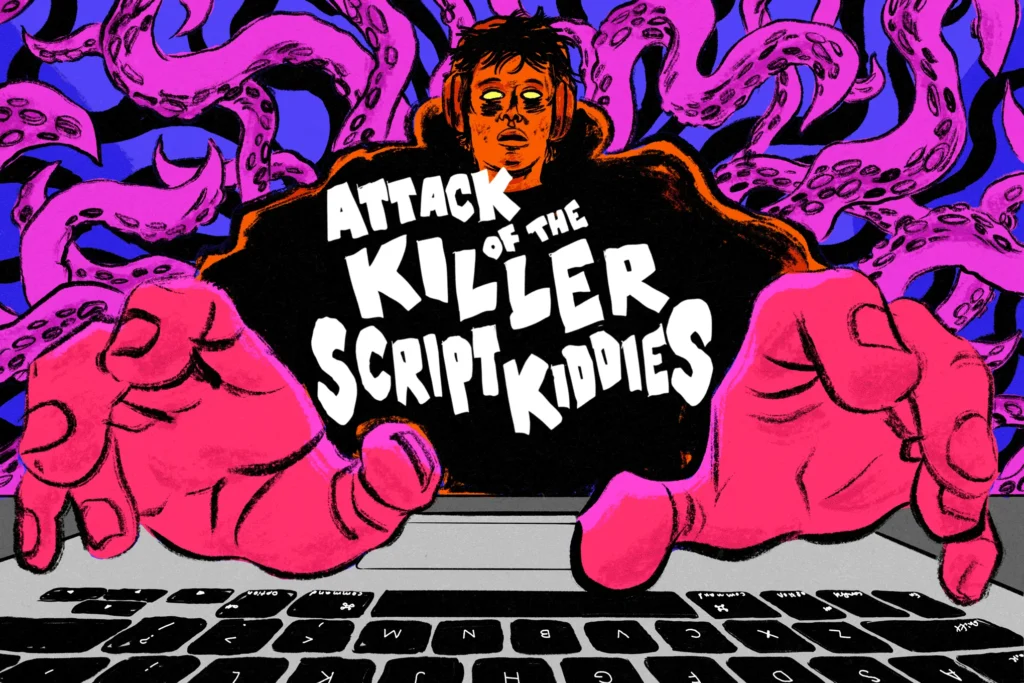
This is where it gets complicated. The same capability that can harden open source software can also weaponize script kiddies. The term “script kiddie” has always been slightly derogatory — someone who uses tools without understanding them. But if the tool is Claude Mythos, the script kiddie just became a serious threat. They don’t need to understand buffer overflows or heap spraying. They just need to point the AI at a target and ask, “Find me a remote code execution in this web server.”
The defense side is racing too. Every major cloud provider I know of is integrating AI-based code analysis into their CI/CD pipelines. Google, Microsoft, and Amazon all have internal projects they’re not talking about publicly. But the offense has an advantage: they only need one hole. The defense needs to find them all.
I don’t think we’re headed for a catastrophe, but I do think the next 12 months will be uncomfortable. The script kiddie attack surface is about to expand dramatically. We’ll see more automated exploitation, more chaining of low-severity bugs into critical exploits, and more pressure on maintainers of smaller open source projects who can’t afford AI tooling.
What gives me some hope is that the DARPA competition also showed something else: the AI tools were good at finding bugs, but they weren’t great at fixing them. Patching is still a human-intensive process. And the best teams in that competition were the ones who knew how to interpret the AI’s output, not just run it. That’s a skill that takes time to build.
So yes, the killer script kiddies are coming. But so are the defenders who understand that AI is a tool, not a replacement. The question is who learns to wield it faster.
Comments (0)
Login Log in to comment.
Be the first to comment!