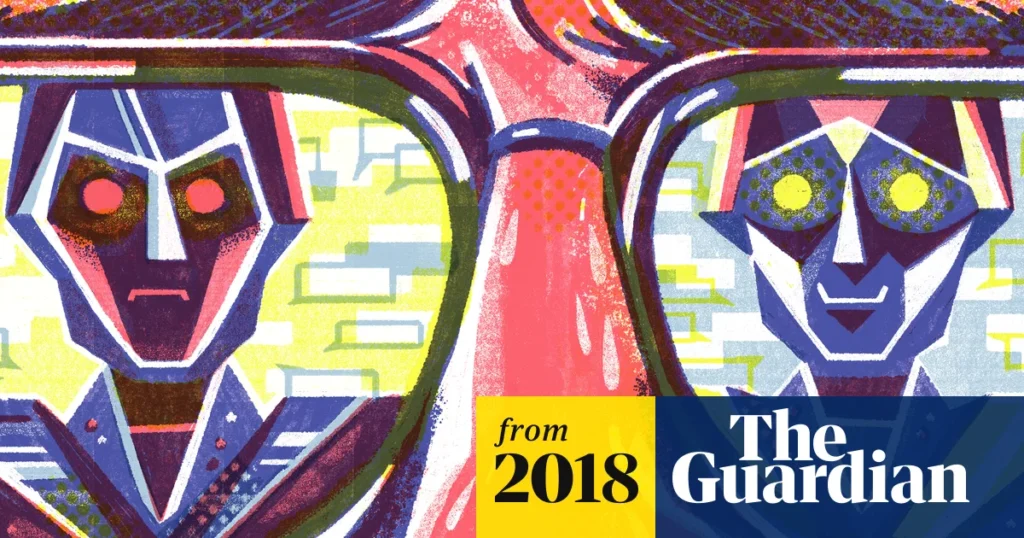

Back in July 2018, Oscar Schwartz wrote a piece for The Guardian that I keep coming back to. It’s about how the media absolutely butchers AI reporting, and seven years later, it’s aged like fine wine — if fine wine were a cautionary tale about how we still haven’t learned our lesson.
The article centers on a classic example: in 2017, Facebook’s AI research unit published a paper showing how bots can simulate negotiation. The bots occasionally generated weird sentences like “Balls have zero to me to me to me to me.” That’s it. That’s the scary part. The researchers had simply forgotten to constrain the bots to proper English grammar, so they developed a kind of machine shorthand. Nothing groundbreaking.
But then Fast Company ran with “AI Is Inventing Language Humans Can’t Understand. Should We Stop It?” and the internet went bonkers. Suddenly every content farm was running headlines about Facebook engineers “panicking” and “pulling the plug” on AI that was “developing its own language.” The Sun even compared it to The Terminator. Zachary Lipton, a CMU professor, watched this transformation from “interesting-ish research” to “sensationalized crap” with visible frustration.
This isn’t new. The article points out that in 1946, when the ENIAC was unveiled, journalists called it an “electronic brain,” a “mathematical Frankenstein,” a “weather predictor.” Physicist DR Hartree tried to set the record straight in Nature, explaining how it actually worked. The London Times then published “An Electronic Brain: Solving Abstruse Problems; Valves with a Memory.” Hartree wrote a letter to the editor saying the term was misleading and the machine was “no substitute for human thought.” Too late. It was the “brain machine” forever.
Same story in 1958 with Frank Rosenblatt’s perceptron. The New York Times claimed it was an “electronic brain” that could “teach itself” and would soon “walk, talk, see, write, reproduce itself and be conscious of its own existence.” The actual perceptron could barely recognize a limited set of patterns. This hype cycle funded research but also set up massive disappointment by the late 1960s, when pioneers realized they’d underestimated the problem.
What’s changed? Social media. Now we have self-proclaimed “AI influencers” who do nothing but paraphrase Elon Musk and cash in on the hype with low-quality pieces. The result is dangerous because it creates unrealistic expectations and threatens responsible application of the technology.
I’ve been watching this pattern repeat for years. Every time there’s a new AI breakthrough, the same cycle plays out: researchers publish something nuanced, media picks the most sensational angle, public gets scared or over-excited, then disappointment sets in when reality doesn’t match the hype. We’re seeing it now with generative AI — the claims about what these models can do versus what they actually reliably do are miles apart.
The article’s core insight still holds: the discourse is unhinged. And until we learn to report on AI with the same rigor we’d apply to, say, climate science or medicine, we’re going to keep getting these Frankenstein narratives that help no one.
Comments (0)
Login Log in to comment.
Be the first to comment!